Seed Catalog Overwhelm: How to Pick the Right Seeds for Your Climate and Lifestyle
Seed catalogs shouldn’t feel overwhelming. Learn how to choose the right seeds for your climate, space, and lifestyle—and plant with confidence this season.
Published 27 March 2023
Is it too late to start a garden? Too early? Is there an ideal time to start? It may seem like planting right after your last frost date in the spring is your only option. Really a garden can be started at any time of the year. Time, light, temperatures, space, and water needs will determine what your garden can look like at any given time. Success will be determined by how well you match plants with the available resources. There is always something that can be grown, whether it is spring, summer, fall, or winter. In addition to matching plants to the correct natural conditions, additional tools and practices can be used to meet the growing requirements.
Just because you get a late start to the season doesn't mean you need to skip your usual crops. Many vegetables have a great selection of varieties that can mature quickly. There are many hybrids available that boast the same great flavor you love on a shorter time table. Take advantage of these advances with our wide selection of conventional, organic, heirloom, and hybrid varieties.
Starting seeds indoors allows you to get an early start on plant growth. This may allow you to enjoy a longer harvesting period or avoid unfavorable weather and temperatures (hot or cold). In areas with short growing seasons (under 120 days) it is common to start warm-season vegetables and many flowers indoors until they can be transplanted with warming spring temperatures. For planting cool-season vegetables in the fall, seeds may also be started indoors during the hot summer months.

In some areas that experience extreme heat during the hot summer months, shade cloth may be used to cool temperatures around your plants as well as reduce the intensity of afternoon light. It is important to select a shade cloth that does not block out too much light. You can find shade cloth available in black or white colors. White will reflect light and create a cooler environment. Black will absorb light, maintaining warmer temperatures for heat-loving crops. They are also available with varying levels of light diffusion. Thirty percent is good for mixed vegetables and northern climates. Fifty percent is ideal for most vegetables, including lettuce and tomatoes. Sixty percent can be used on succulents and ornamental plants. 70 percent should be used on light-sensitive plants.
Cold frames are structures similar to a raised bed or large container but with a latch or window that can be closed to insulate young plants and opened during the regular growing season.

Cloches work similarly to cold frames but are a portable covering rather than a growing container. Cloches include glass, paper, or plastic coverings placed over a plant to create a greenhouse effect and insulate a young plant until the weather warms. Wall o Water is a popularly used cloche that utilizes the heat-storing and temperature-stable properties of water to insulate plants such as tomatoes from late spring frost and dipping night temperatures.
Individual Cloche - Can be made from many household containers such as a milk jug, plastic boxes, buckets, etc. simply place it over your young plant to insulate it against cool temperatures.
A light covering that is placed over a crop and hilled up with soil or something to hold it down around the edges. It should still be loose enough not to restrict growth. A floating row cover can be made of various materials with perforations to allow airflow to take place.

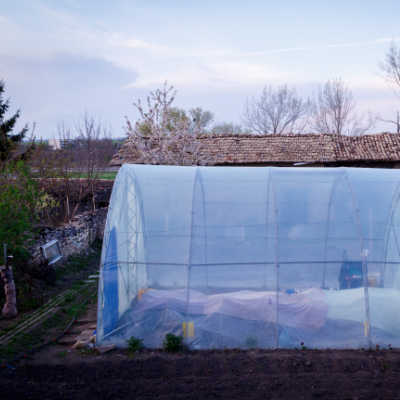
These are tunnels made by extending a heavy-duty clear plastic sheet over a support structure. They are cheaper and easier to create than greenhouses while also being temporary in nature. Because they are not temperature regulated, it is important to monitor the temperature inside of them and create ventilation by cutting slits in them or rolling up the sides to prevent overheating.
These tunnels are a mini lightweight version of the high tunnel for insulating plants after transplanting. They are ideal for use when young transplants have not completed the hardening-off process before being transplanted. These provide limited protection from low temperatures or wind.

A true greenhouse is a permanent structure capable of temperature control, ventilation, and controlled lighting conditions. While they can be costly to construct, they offer the most control over growing conditions all year long with the ability to cool, heat, and light according to specific crop needs.
1 comment
Nice article on extending the growing season.