![]() |
Written By Ashleigh Smith |
Fertilizing is the practice of supplying your plants with the nutrients they need to grow strong, produce abundantly, and resist stress. Whether you are growing a raised bed of vegetables, a container of culinary herbs, or a cutting garden full of zinnias and dahlias, understanding how to feed your garden is one of the most impactful skills you can develop.
What is Fertilizer
Fertilizers are nutrients that are added to your soil or water to feed plants and support root development, foliage growth, and fruit and flower production. Without the proper nutrients, plants are more susceptible to disease and experience poor development. If the basic nutrient requirements are not met, plants will experience greater stress and show an overall decrease in vigor and in fruit, flower, and seed development.
Fertilizers will state the concentration of each nutrient on the package. Nitrogen, Phosphorus, and Potassium are macronutrients and are required for plant growth in the greatest concentrations. You can find the concentration of each nutrient reported on fertilizer packaging in the same order N-P-K.
Beyond these macronutrients, plants require secondary nutrients such as calcium, magnesium, and sulfur, as well as a wide range of micronutrients and trace minerals in smaller amounts. These are often overlooked, but deficiencies can cause real problems — even when N, P, and K levels are adequate.
Understanding the NPK Label
Every fertilizer product sold in the United States displays three numbers on the label, such as 10-5-14 or 5-3-3. These numbers represent the percentage by weight of the three primary macronutrients:
- Nitrogen (N) - Promotes leafy foliage growth.
- Phosphorus (P) - Encourages root development, flowering, and fruit production.
- Potassium (K) - Supports overall health, water management, and disease resistance.

The Role of pH and Soil Health
Fertilizer can only do its job if your soil pH allows plant roots to absorb nutrients. Soil pH is measured on a scale of 0 to 14 — below 7 is acidic, above 7 is alkaline, and 7 is neutral. Most nutrients are most available to plants in a slightly acidic to neutral range of 6.0-7.0. Some select plants, like blueberries, prefer a lower pH of around 4.5-5.5. Soil pH is typically adjusted by applying agricultural lime (limestone) to raise the pH or elemental sulfur to lower it.
Organic Vs. Synthetic Fertilizers
Organic fertilizers are derived from natural materials — plant matter, animal byproducts, minerals, and microorganisms. They release nutrients slowly as soil organisms break them down. This is why organic fertilizers often also act as soil amendments or conditioners, making them favored for long-term soil health and production on land used for generations.
Synthetic fertilizers are mined or manufactured formulas that deliver concentrated, immediately available nutrients. They work quickly and predictably, which can be useful for correcting deficiencies fast. They are also more cost-effective for large-scale growers, as you can get more nutrients at a fraction of the weight and volume of natural fertilizer sources. However, relying on synthetic fertilizers alone can leave your soil lacking the water retention, root development, and overall health benefits associated with many organic fertilizer materials and soil amendments.
Your garden will benefit the most from a mixed approach. By using a combination of fertilizers and soil amendments, you can rest assured that your plants are receiving the macro- and micro-nutrients they need. While the synthetic fertilizers will deliver a timely dose of food, the organic fertilizers will go to work beneath the surface to develop an extensive root system and defense network to help your crops stand up to environmental stressors over an extended period of time.
Types of Fertilizers
Not all fertilizers work the same way or suit every situation. Here is a breakdown of the main types and when each one shines.
Granular Fertilizers
Granular fertilizers come in a dry, pellet or powder form that you spread across the soil surface or mix into the top few inches of your beds. Most granular fertilizers work via slow-release, meaning they deliver nutrients over the course of weeks to months and require fewer applications. We recommend working a granular fertilizer into your pre-planting preparation and for a mid-season boost.
Liquid Fertilizers
Liquid fertilizers are mixed with water and applied either as a soil drench or a foliar spray directly on leaves. Because they are already in a soluble form, they are absorbed quickly — making them the right choice when you need to correct a deficiency fast, give plants a boost at a key growth stage, or feed plants growing in containers where nutrients wash out more readily. Liquid fertilizers require more frequent application than granular options.
Compost and Compost Teas
Compost is partially decomposed organic matter — the foundation of healthy garden soil. It adds some nutrients, improves soil structure, increases water retention in sandy soils and drainage in clay soils, and feeds the microbial communities that make nutrients available to plant roots. Working compost into your beds every season is one of the single best things you can do for your garden. However, you will likely need to pair this practice with additional fertilizer applications throughout the season.
Compost teas are water extractions of compost that concentrate beneficial microbes and soluble nutrients into a liquid you can apply directly to soil or foliage. They are particularly useful for giving transplants a strong start or reviving stressed plants.
Biological Amendments
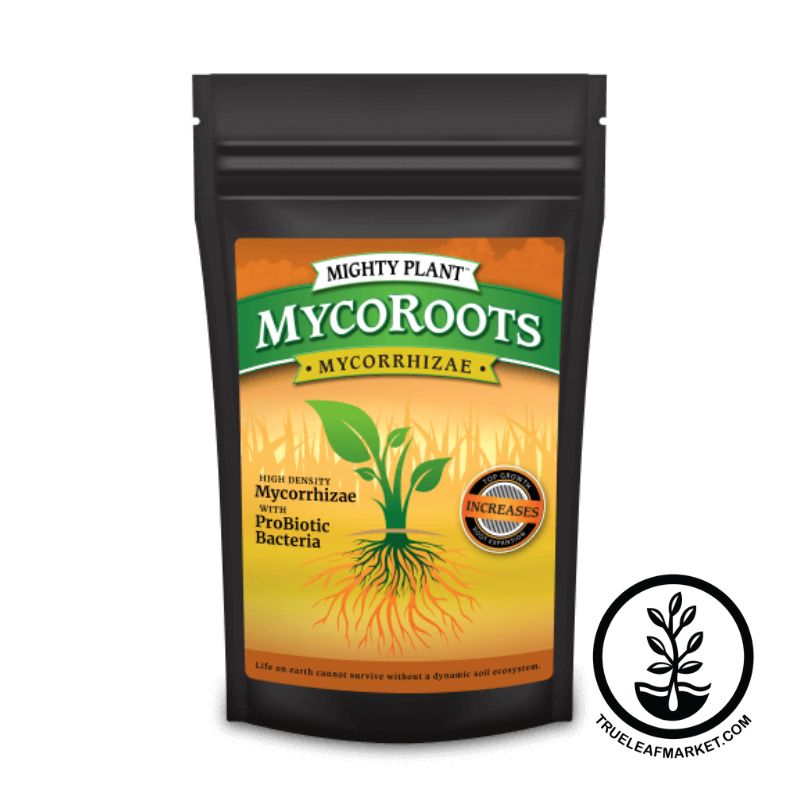
Biological amendments introduce or support beneficial living organisms in your soil. Mycorrhizal inoculants, for example, establish fungal networks around plant roots that dramatically expand a plant's ability to absorb water and nutrients. Worm castings and insect frass introduce microbial life along with gentle nutrition. These products do not just feed plants — they improve the underlying biology of your soil in lasting ways.
Trace Mineral Supplements
Trace minerals are needed in tiny amounts, but they are not optional. Deficiencies in iron, zinc, boron, manganese, and other micronutrients can cause chlorosis, poor fruit set, stunted growth, and other problems that NPK fertilizers alone will not fix. Volcanic mineral products like Azomite supply a broad spectrum of trace elements that many garden soils lack, especially soils that have been cultivated intensively over many years.
Fertilizing is not about chasing the perfect product or the most aggressive feeding schedule. It is about understanding what your plants need at each stage of growth, building soil health over time, and making targeted adjustments when something is off. A gardener who fertilizes thoughtfully — matching the right product to the right plant at the right time — will consistently outperform one who simply applies more of everything.

0 comments
No comments yet! Be the first to start a conversation.